When a hurricane approaches, one of the most important parts of emergency preparedness is knowing how much backup power your home actually needs. Strong winds, flooding, and damaged electrical infrastructure can leave communities without electricity for hours or even several days. Having a reliable backup power system can help you maintain essential household functions, protect food and medicine, and stay connected during an extended outage. However, choosing the right system requires more than simply buying the largest battery or generator available. You need to understand your home’s energy consumption and determine which appliances and devices are truly essential.
This hurricane backup power capacity guide explains how to assess your household electricity needs, estimate power consumption, and select a backup solution that matches your situation.
Why Backup Power Capacity Matters During a Hurricane
A hurricane-related power outage can happen unexpectedly and may last much longer than a typical electrical interruption. While some outages are resolved within a few hours, severe storms can damage power lines, substations, and other infrastructure, potentially causing prolonged disruptions.
A backup power system provides an independent source of electricity when the utility grid is unavailable. Depending on its capacity, it may keep important devices running, including refrigerators, freezers, lights, internet equipment, medical devices, fans, and communication equipment.
The key is to understand that backup power systems have different ratings. Power capacity is generally measured in watts (W) or kilowatts (kW), while battery energy storage is measured in watt-hours (Wh) or kilowatt-hours (kWh). The watt rating determines how much power a system can deliver at one time, while the watt-hour rating indicates how long stored energy can support your devices.
For example, a battery with a capacity of 2,000 watt-hours does not necessarily provide 2,000 watts continuously for one hour. Actual runtime depends on the power requirements of connected devices and the system’s efficiency.
Start by Listing Your Essential Appliances
The first step in determining your backup power needs is to make a list of appliances and devices you want to operate during an outage. Avoid including everything in your home automatically. Instead, focus on essential equipment that supports safety, food preservation, communication, and basic comfort.
Common emergency priorities include:
- Refrigerator and freezer
- Wi-Fi router and modem
- Mobile phone chargers
- LED lights and lamps
- Medical equipment
- Fans
- Television or radio
- Sump pump
- Security systems
- Laptop or computer
- Garage door opener
- Small kitchen appliances
Once you have your list, check the label or user manual for each device to find its wattage. Some appliances display their power consumption directly, while others may provide voltage and amperage information that can be used to estimate wattage.
A simple calculation is:
Watts = Volts × Amps
You can also use a plug-in electricity meter to measure the actual consumption of household devices. This can be particularly useful for appliances that cycle on and off.
Understand Running Watts and Starting Watts
One of the most important considerations in this hurricane backup power capacity guide is the difference between running power and starting power.
Many appliances with electric motors require additional energy when they first start. Refrigerators, freezers, sump pumps, air conditioners, and some power tools may have a starting surge that is significantly higher than their normal operating wattage.
For example, a refrigerator might normally consume around 150 watts while running but require considerably more power for a brief moment when the compressor starts. If your backup system cannot handle that surge, the refrigerator may fail to start even though its normal running consumption appears to be within the system’s limits.
When selecting a backup system, check both its continuous output and surge output. The continuous rating should cover the combined running wattage of your essential appliances, while the surge rating should accommodate the highest startup demand.
Calculate Your Total Energy Requirements
After identifying essential devices, estimate how long you want to operate each one during the outage.
Suppose a device uses 100 watts and runs for 10 hours. Its energy requirement would be:
100 watts × 10 hours = 1,000 watt-hours
Repeat this calculation for each appliance and add the results together. This provides an approximate estimate of your daily energy needs.
For example, if your essential equipment requires 3,000 watt-hours per day, a battery system with a nominal capacity of 3 kWh might appear sufficient for one day. However, real-world performance depends on inverter efficiency, battery chemistry, usable capacity, temperature, and other factors.
It is generally wise to include a safety margin rather than choosing a system that operates at its maximum capacity. Additional capacity can provide flexibility if the outage lasts longer than expected or if you need to power an unexpected essential device.
Decide What You Need to Power
Not every appliance needs to operate continuously. One effective strategy is to prioritize devices according to their importance.
A refrigerator may only need to run periodically to maintain a safe temperature. Lights can be limited to the rooms being used. A television may be operated for a few hours instead of all day. Laptops and phones can be charged and then disconnected.
This approach can significantly extend the life of your stored energy.
You might divide your appliances into three categories: critical, important, and optional. Critical devices could include medical equipment and refrigeration. Important devices might include lighting, communication equipment, and fans. Optional devices could include entertainment systems or high-consumption kitchen appliances.
This prioritization helps you select a backup system based on realistic emergency needs instead of trying to replicate your home’s entire electrical supply.
Consider the Length of the Outage
The expected duration of a hurricane outage should influence your capacity decision. A small battery may be adequate for a short interruption, while a multi-day outage requires a much larger energy reserve or a way to recharge the system.
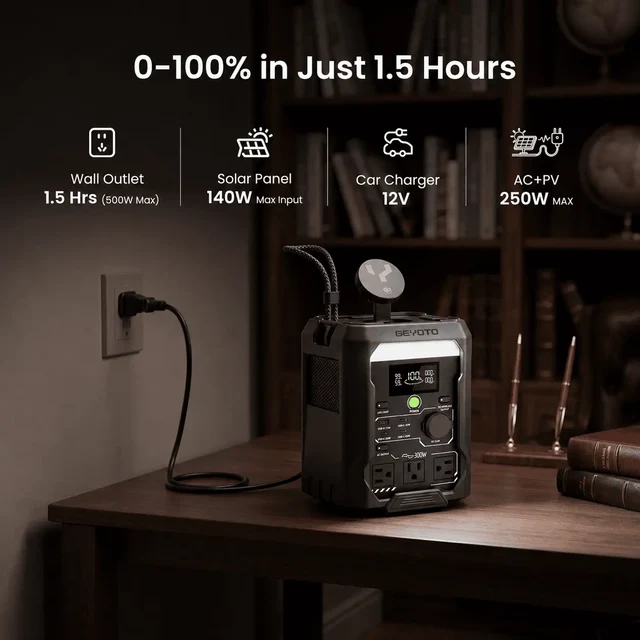
If you live in an area where severe hurricanes frequently cause extended outages, consider combining battery storage with solar panels or another compatible charging method. Solar charging can provide an additional source of energy when the electrical grid is down, although cloudy weather and storm conditions may reduce solar production.
Portable power stations can be convenient for smaller loads, while larger battery systems may be better suited to households that need to support more appliances. Generators can also provide substantial power, but they require fuel and must be operated safely outdoors because of carbon monoxide risks.
Think About Your Home’s Unique Energy Needs
Every household has different priorities. A family with young children may prioritize refrigeration, lighting, and fans. A household with medical equipment may require uninterrupted power for critical devices. Homes in hot climates may need to consider cooling requirements, while properties with basements may rely on sump pumps to prevent flooding.
If you use an electric well pump, electric heating system, or central air conditioner, your energy requirements may be considerably higher than those of a household relying on smaller appliances.
You should also consider whether your backup system can connect directly to household circuits. Larger installations may require professional installation and an appropriate transfer switch to safely isolate backup power from the utility grid.
Build an Emergency Power Plan
A backup power system is only one part of hurricane preparedness. Before storm season, test your equipment, charge batteries, inspect cables, and make sure you understand how the system operates.
Keep important devices and charging cables together so they are easy to access during an emergency. If you use a fuel-powered generator, store fuel according to local safety regulations and manufacturer recommendations. Never operate a fuel-burning generator inside a home, garage, basement, or enclosed area.
It is also useful to maintain a written list of essential appliances and their estimated power requirements. This makes it easier to decide what to connect first when an outage occurs.
Choose Capacity With Future Needs in Mind
Your energy needs may change over time. You might purchase new appliances, add medical equipment, install additional electronics, or begin working from home. Choosing a backup system with some extra capacity can make it more useful over the long term.
At the same time, buying excessive capacity can increase costs unnecessarily. The goal is to find a practical balance between power output, energy storage, runtime, portability, recharge options, and budget.
The best hurricane backup power capacity guide is ultimately the one that helps you match your backup system to your actual household requirements. Start by identifying essential appliances, calculate their running and starting power, estimate daily energy consumption, and determine how long you need the system to operate.
Final Thoughts on Hurricane Backup Power Capacity
Preparing for a hurricane means preparing for uncertainty. Power may return quickly, or an outage may continue for several days. Understanding your home’s energy needs allows you to make a more informed decision about backup power capacity and avoid relying on guesswork during an emergency.
By calculating wattage, considering startup surges, estimating daily energy consumption, prioritizing essential devices, and planning for extended outages, you can build a backup power strategy that fits your household. Whether you choose a portable battery, a larger home energy storage system, solar-assisted backup power, or another solution, the right capacity can provide valuable resilience when severe weather disrupts normal electricity service.
A thoughtful approach to backup power preparation can help keep your refrigerator running, your communication devices charged, your essential equipment operating, and your family more comfortable when the grid goes down. Most importantly, understanding your actual energy requirements before hurricane season gives you the confidence to respond effectively when an unexpected outage occurs.