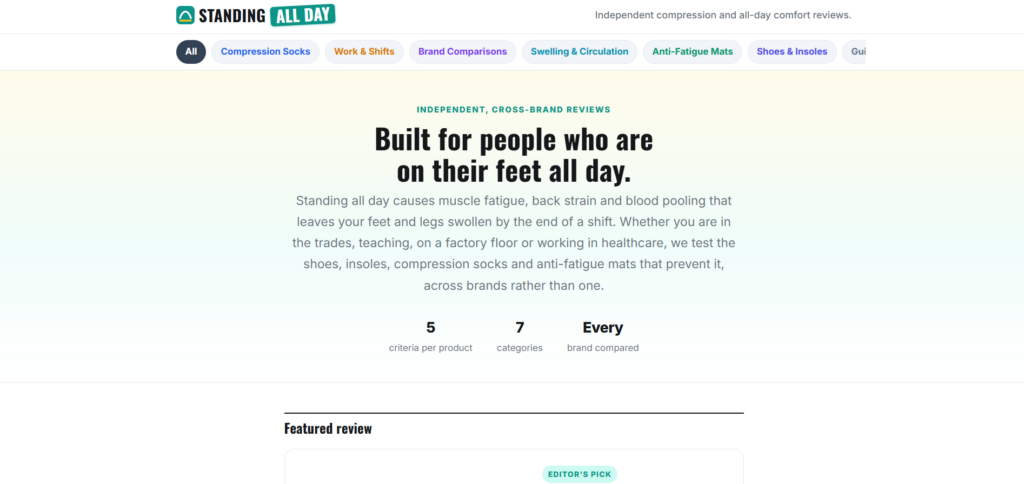
For many workers, spending long hours on their feet is simply part of the job. Retail employees, healthcare professionals, restaurant workers, teachers, factory employees, warehouse staff, and service professionals may all spend much of their working day standing or walking.
While staying active can be beneficial, prolonged standing can also become tiring when the body doesn’t have enough support or opportunities to change position. StandingAllDay.com is a useful focus for exploring practical ideas that can help people create a more comfortable and sustainable work routine.
The Importance of a Good Standing Routine
A long shift can place repeated demands on your feet, legs, and back. Even when you’re standing still, your muscles are working to maintain balance.
Over time, this can lead to general fatigue and discomfort. The goal isn’t necessarily to avoid standing but to make the experience more manageable through sensible habits.
A good standing routine starts with understanding your workplace and identifying the factors that make your shift uncomfortable.
Choose Footwear Carefully
The shoes you wear can influence how you feel after several hours on your feet.
Look for footwear that fits properly and is appropriate for your occupation. A comfortable shoe should provide suitable stability and cushioning while allowing your toes enough room to move naturally.
Avoid choosing work shoes only because they look good. For someone who spends eight or more hours standing, comfort and function should be major considerations.
Workplace Safety Comes First
Every job has different safety requirements.
A restaurant worker may need slip-resistant shoes, while a construction employee may need protective footwear. Warehouse environments can also have specific requirements depending on the tasks being performed.
Before prioritizing comfort features, make sure your footwear meets the safety standards of your workplace.
Know When Your Shoes Need Replacing
Even high-quality footwear eventually wears down.
Inspect your shoes regularly for damaged soles, uneven wear, flattened cushioning, and areas that cause irritation. If they no longer provide the same level of support, replacing them may improve your overall work experience.
Using worn-out shoes for too long can make an already demanding shift feel even more difficult.
Improve the Surface Under Your Feet
Your standing surface can be just as important as your shoes.
Hard flooring can become uncomfortable during long periods of stationary standing. If you work at a fixed workstation, an anti-fatigue mat may provide additional cushioning.
These mats can be useful in kitchens, laboratories, workshops, retail counters, and similar work areas.
Make sure the mat is stable, appropriate for the environment, and doesn’t interfere with workplace safety.
Keep Changing Your Position
Standing doesn’t mean remaining motionless.
If your job allows it, change your stance throughout the day. Shift your weight, take a few steps, move your ankles, or switch between different tasks.
Small movements can provide variation and may make long periods of standing feel less repetitive.
Maintain a Balanced Posture
Posture is another important part of standing comfort.
Try not to lean continuously on one leg or lock your knees. Keep your shoulders relaxed and avoid unnecessary tension in your neck and upper body.
Your posture should also change naturally. Instead of searching for one perfect position, focus on maintaining a comfortable range of positions throughout your shift.
Make Your Workspace Work for You
The organization of your workstation can have a surprisingly large effect.
Frequently used tools and materials should be easy to reach. If possible, adjust work surfaces so you don’t have to repeatedly bend, twist, or stretch.
Reducing unnecessary movements can make a difference when the same actions are repeated throughout the day.
Take Advantage of Breaks
Breaks give your body an opportunity to change position.
If you’ve been standing for hours, sitting for a few minutes may provide a welcome change. You can also use the break to drink water and relax.
When sitting isn’t possible, walking or switching activities can still provide some variation.
Stay Hydrated During the Day
Long shifts can make it easy to overlook hydration.
Where appropriate, keep water accessible and drink according to your individual needs. People working in hot environments or performing physically demanding tasks may need to pay additional attention to fluid intake.
Hydration is one simple habit that fits naturally into a broader approach to workplace wellbeing.
Pay Attention to Socks
Comfortable footwear works best when paired with suitable socks.
Choose socks that fit properly and don’t bunch inside your shoes. Breathable materials can be helpful for workers who spend their shifts in warm environments.
If you are considering compression socks for a specific medical concern, speak with a qualified healthcare professional about whether they’re appropriate for you.
Build an After-Work Recovery Routine
Recovery shouldn’t be overlooked.
After a long shift, remove your work shoes and give your feet and legs time to relax. Comfortable footwear at home may be useful if walking barefoot isn’t comfortable.
Gentle movement can be part of a recovery routine when it feels comfortable. If an activity increases pain, stop and seek appropriate guidance.
Understand When Discomfort Requires Attention
Some tiredness after a long shift is normal. Persistent pain is different.
If discomfort continues despite rest, better footwear, and changes to your work routine, consider speaking with a healthcare professional.
Sudden severe pain, significant swelling, numbness, weakness, or other unusual symptoms should not simply be attributed to prolonged standing.
Create a Routine That Fits Your Job
There is no single solution that works for everyone.
A nurse may spend most of the day walking, while a cashier may remain in one location. A chef may stand on a hard kitchen floor, while a warehouse worker may constantly alternate between standing, walking, and lifting.
Your strategy should reflect the actual demands of your workplace.
The StandingAllDay.com Advantage
The focus of StandingAllDay.com can cover many practical aspects of life on your feet.
Topics can include:
- Comfortable work footwear
- Standing mats
- Workplace ergonomics
- Posture and positioning
- Movement during long shifts
- Workday hydration
- Foot and leg recovery
- General standing comfort
This broad approach recognizes that comfort usually comes from several small factors working together.
Final Thoughts
Long hours on your feet can be physically demanding, but thoughtful preparation can make the experience easier. Start with suitable footwear, evaluate your standing surface, keep moving when possible, maintain a balanced posture, and use available breaks.
StandingAllDay.com provides a strong focus for discussing practical strategies for people who spend much of their working day standing.
The goal isn’t to find one perfect solution. It’s to create a collection of sensible habits that support comfort, safety, movement, and recovery throughout your workday.