Heavy rainfall can strike with little warning, leaving homeowners to deal with one of the most frustrating property emergencies: a submerged basement. Whether caused by overwhelmed municipal drainage systems, sump pump failure, or foundation cracks, water intrusion can cause severe damage in a matter of hours. Prompt and thorough restoration is critical to prevent permanent structural decay and costly mold growth. Following a structured approach ensures that your home is restored safely and efficiently.
Here are the essential steps and tips to guide you through effective basement flooding cleanup after severe weather.
Safety First: Crucial Steps Before Entering
Before rushing into a flooded basement to salvage belongings, your primary focus must be safety. Floodwater presents several hidden hazards, ranging from electrical shocks to biohazards.
Turn Off the Power and Gas
Water and electricity are a deadly combination. Never step into a flooded basement if the power is still on. If your circuit breaker is located in the basement and you cannot reach it without stepping into standing water, call a licensed electrician or your local power utility to shut off electricity to the property remotely. Additionally, if you smell gas or suspect a line leak, evacuate immediately and contact your gas provider.
Wear Protective Gear
Floodwater from heavy rain often mixes with ground contaminants, sewage backup, and chemical runoff. Always wear heavy-duty rubber boots, waterproof gloves, protective eyewear, and an N95 respirator mask during basement flooding cleanup. This equipment protects you against harmful bacteria, parasites, and mold spores.
Inspect Structural Integrity
Excessive water pressure against foundation walls can cause bowing, cracks, or collapse. Visually inspect the surrounding walls, ceiling, and stairs before entering. If you notice severe warping, deep cracks, or unstable structural elements, stay out and contact a professional contractor immediately.
Assessing the Water and Damage
Understanding the source and contamination level of the water helps dictate the safest approach to restoration.
Identify the Category of Floodwater
Water damage generally falls into three categories:
- Clean Water (Category 1): Originates from broken clean water pipes or rain entering through windows/roofs.
- Gray Water (Category 2): Contains significant contamination, such as overflow from washing machines, dishwashers, or sump pump failures carrying dirt.
- Black Water (Category 3): Highly unsanitary water containing sewage, surface washward runoff, or river water carrying dangerous pathogens.
If heavy rain causes sewer backup into your basement, treat it as black water. This situation requires specialized sanitization and often professional intervention.
Document the Damage for Insurance
Before pumping out any water or throwing away ruined items, document everything thoroughly for your insurance claim:
- Take clear photographs and high-definition video of the water level on the walls.
- Record damaged structural elements, flooring, and personal items.
- Make a detailed list of lost items, including estimated purchase dates and values.
- Contact your insurance agent immediately to confirm flood coverage details and request an adjuster visit.
Removing Standing Water Efficiently
The longer water lingers in your basement, the greater the damage to your foundation, drywall, and structural framing. Removing standing water as quickly as possible is the top priority during basement flooding cleanup.
Choose the Right Water Removal Equipment
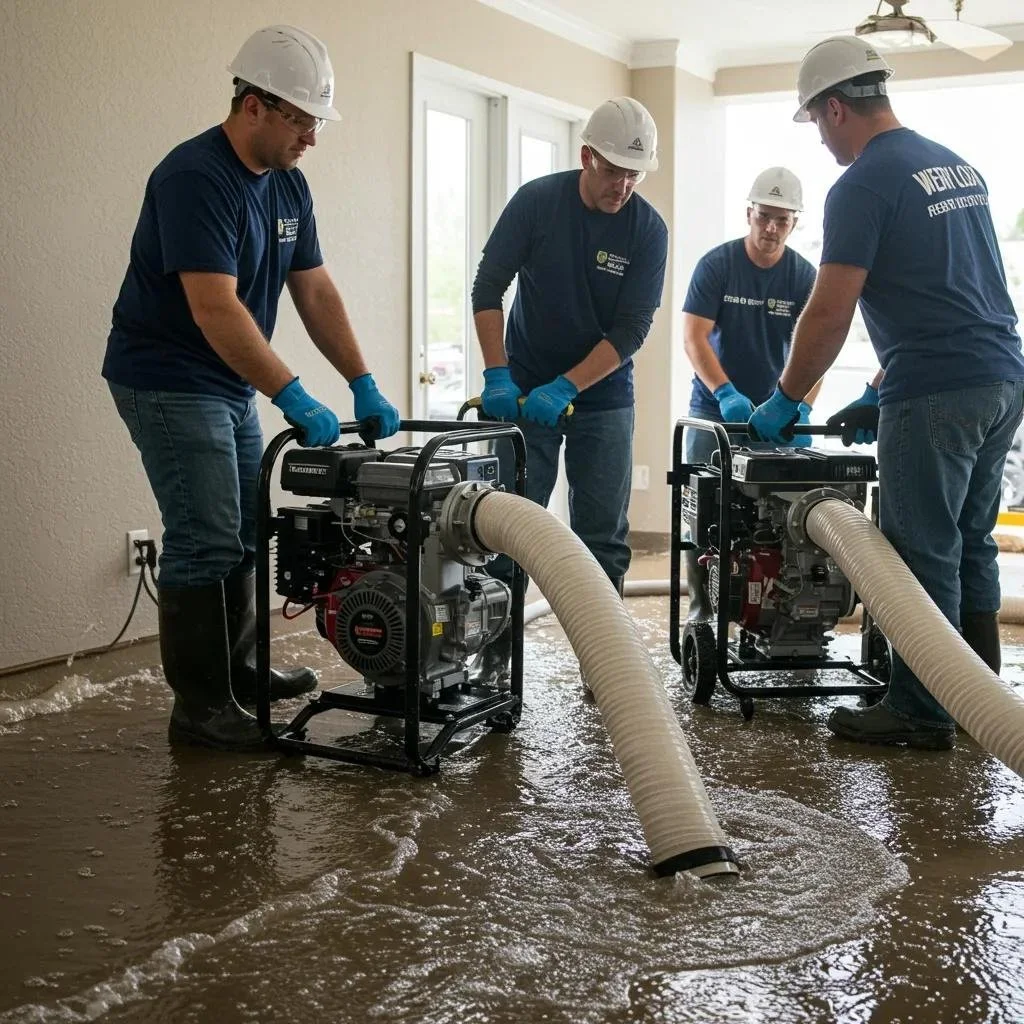
- Submersible Pumps and Trash Pumps: Ideal for deep standing water (several inches to feet). Rent or purchase a high-capacity pump to rapidly extract large volumes of water.
- Wet/Dry Vacuums: Perfect for removing lower water levels (under two inches) and tackling lingering puddles in corners.
- Mops, Squeegees, and Buckets: Useful for small residual pockets of moisture once heavy pumping is finished.
Avoid Pumping Out Water Too Quickly
If the ground surrounding your home is completely saturated from heavy rain, pumping water out of your basement too fast can create an imbalance in hydrostatic pressure. When external soil pressure exceeds internal basement pressure, foundation walls can crack or cave inward. A safe rule of thumb is to remove about 2 to 3 feet of water per day until the basement is clear.
Drying and Dehumidifying the Basement
Extracting liquid water is only half the battle; residual humidity trapped in building materials can sustain mold colonies within 24 to 48 hours.
Increase Air Circulation and Ventilation
Once standing water is removed, open windows and doors if external humidity is low. Set up heavy-duty industrial air movers or high-velocity floor fans to circulate air continuously across floors and lower walls. Point fans directly at saturated areas to speed up evaporation.
Run Commercial-Grade Dehumidifiers
Standard household dehumidifiers are rarely powerful enough for large-scale flooding. Rent commercial refrigerant or desiccant dehumidifiers capable of drawing tens of gallons of moisture from the air daily. Keep doors and windows closed while running dehumidifiers so they focus entirely on extracting moisture from inside the room.
Cleaning, Sanitizing, and Salvaging
Disinfecting all surfaces is essential to prevent mold growth, eliminate odors, and destroy disease-causing microbes.
Sort and Discard Unsalvageable Materials
Porous materials absorb contaminated water quickly and are nearly impossible to clean completely.
- Padded Carpeting and Underlayment: Must usually be removed and discarded.
- Drywall and Insulation: Cut away saturated drywall at least 12 to 18 inches above the highest water line. Remove and discard wet fiberglass or cellulose insulation.
- Upholstered Furniture and Mattresses: If exposed to contaminated floodwater, these items should be disposed of safely.
- Hard/Non-Porous Items: Glass, metal, plastic, and solid wood furniture can usually be disinfected and saved.
Deep Cleaning and Disinfection
Scrub all hard surfaces—including concrete floors, brick walls, and non-porous furniture—with hot water and anti-microbial cleaners or a solution of 1 cup household bleach per gallon of water. Ensure proper ventilation while working with cleaning chemicals.
Preventing Future Basement Flooding
Once your basement is clean and dry, implement preventive measures to safeguard your property against future heavy rain events.
Maintain Sump Pumps and Install Battery Backups
Sump pumps are your primary defense against groundwater rising into your home. Test your pump regularly by pouring a bucket of water into the pit to ensure the float switch activates properly. Because severe storms often bring power outages, install a battery-backup sump pump system or a water-powered auxiliary pump.
Improve Exterior Drainage and Grading
Keep rainwater away from your foundation:
- Clean Rain Gutters: Clear leaves and debris regularly to avoid overflow.
- Extend Downspouts: Ensure downspouts discharge water at least 5 to 10 feet away from foundation walls.
- Grade the Soil: Slope the ground around your home downwards by at least 6 inches over a 10-foot span away from the house.
Seal Foundation Wall Cracks
Inspect concrete foundation walls internally and externally for hairline fractures. Apply masonry sealant or polyurethane foam injections to seal entry points where water pressure forces moisture indoors.
When to Call Professional Restoration Experts
While minor leaks can be handled independently, large-scale basement flooding cleanup often requires professional equipment and technical expertise. If the water involves raw sewage, covers more than a few hundred square feet, or has remained standing for longer than 48 hours, hiring a certified water damage restoration company is the safest choice. Professionals possess industrial extraction gear, thermal imaging cameras to locate hidden moisture, and commercial antimicrobial treatments that ensure your home is completely safe and fully restored.